Your health firmly under control

MEMAZU

Medical massage Zurich

My Services

Acute or chronic overload causes zones to form in our muscle fibers that undergo pathological changes. Muscle dysfunction and muscle hardening occur. These cause pain.

The “art of touch”, as massage is also called, is one of the forms of treatment that gives people strength and vitality.
The FRZM works with people's self-healing powers and thus achieves a natural change in the mood of all disturbed life functions.
A pregnancy massage can help to increase well-being, relieve tension and relieve discomfort through various manual techniques. The treatment is offered from the 12th week of pregnancy and can be carried out until the end of the pregnancy.
Lymphatic drainage is a decongestant technique that promotes the drainage of lymphatic fluid through gentle touches on the skin.
TMD is a common dysfunction of the masticatory system. For example, if your jaw is tense due to stress, in addition to pain, the grinding of your teeth, among other things, is typical. A targeted massage of the chewing muscles promises relief.

This is how you find me

MEMAZU GmbH

Medical massage practice
Asylstrasse 77
8032 Zurich

Opening hours

Closed Mon
Tue-Sat 11:00 a.m. - 8:00 p.m
So closed

Phone

044 / 203 33 33

Email

info@memazu.ch

Prices for massages

30 minutes

CHF 80,-
  • Subscription 10x CHF 750 (instead of 800)

45 minutes

CHF 115,-
  • Subscription 10x CHF 1050 (instead of 1150)

60 minutes

CHF 150,-
  • Subscription 10x CHF 1400 (instead of 1500)

75 minutes

CHF 180,-
  • Subscription 10x CHF 1700 (instead of 1800)

90 minutes

CHF 210,-
  • Subscription 10x CHF 2000 (instead of 2100)

Coverage of costs by the health insurance company

The costs for my services can be claimed back through your supplementary insurance for complementary medicine with your health insurance provider. For your specific terms and conditions, please contact your health insurance provider directly.

Every patient should ask their health insurance company in advance whether the selected treatment method is covered by their supplementary insurance and whether the treating therapist is recognized by the health insurance company (each health insurance company only reimburses treatments in accordance with its catalog of services).

Spare subscription

Take 10 & save up to CHF 100.-

Please feel free to contact me or send me an email.

Payment

All prices are in CHF.
Cash and Twint are accepted.

Appointment cancellation

Please let me know as early as possible if you cannot keep an appointment (link in confirmation email).
For cancellations less than 24 hours before the agreed appointment, I have to charge the full treatment costs.

Please be on time

To avoid waiting times, the treatments that can be booked are fixed appointments. These are reserved exclusively for you. If you arrive late, I cannot extend the treatment time.

About me

Booking information

Coverage of costs by the health insurance company

Every patient should ask their health insurance company in advance whether the selected treatment method is covered by their supplementary insurance and whether the treating therapist is recognized by the health insurance company (each health insurance company only reimburses treatments in accordance with its catalog of services).

Payment

All prices are in CHF.
Cash and Twint are accepted.

Appointment cancellation

Please let me know as early as possible if you cannot keep an appointment (link in confirmation email).
For cancellations less than 24 hours before the agreed appointment, I have to charge the full treatment costs.

Please be on time

To avoid waiting times, the treatments that can be booked are fixed appointments. These are reserved exclusively for you. If you arrive late, I cannot extend the treatment time.

Trigger point therapy

Trigger point therapy
Acute or chronic overuse causes areas of abnormal change to develop in our muscle fibers. This leads to muscle dysfunction and muscle tension, which can cause pain – often even in distant parts of the body. These are caused by so-called myofascial trigger points. Targeted trigger point therapy can effectively eliminate these pathological changes in the muscles.

What are trigger points?
Trigger points are narrowly defined, highly sensitive spots within a tense muscle. They often feel like small knots and react to pressure with radiating pain. A trigger point in the shoulder area, for example, can cause headaches or discomfort in the arm – the actual cause is thus often overlooked.

How does the treatment proceed?
After a brief medical history is taken, the affected trigger points are treated with targeted manual pressure. The combination of static pressure, ischemic compression, and gentle stretching relaxes the cramped muscle fibers. Blood circulation improves, metabolic waste products are removed, and the pain subsides.

When is trigger point therapy useful?
Trigger point therapy is a particularly effective method for chronic conditions that cannot be adequately relieved with traditional massage. Targeted treatment is also worthwhile for work-related postural problems, sports injuries, or unexplained radiating pain.
Areas of application:

  • Reduction / elimination of myofascial pain
  • Restoration of the physiological function of muscles and connective tissue
  • Treatment of tension headaches and migraines
  • Relief from chronic back, neck and shoulder pain
  • Improvement of blood and lymph circulation
  • Reflexive influence on internal organs
  • Improvement of posture and movement patterns
  • Positive effect on stress and emotional tension, which can lead to increased muscle tension.
Trigger point therapy in Zurich

Myofascial trigger point therapy is a highly effective manual treatment method for chronic pain and muscle tension. In my practice at Asylstrasse 77 in Zurich, I treat the root cause of many complaints – the myofascial trigger points – instead of just alleviating the symptoms. Learn more here about the method, its applications, and its scientific basis.

Myofascial trigger point therapy was founded about six decades ago by the American physicians and scientists David G. Simons and Janet Travell.
However, as early as around 1900, some people described changes in the muscles:

  • Cornelius (around 1900) the “Cornelius nerve points”
  • Schade (1919) the “myogelosis”
  • Lange (1931) coined the term “gelose”

They described pressure-sensitive muscle changes and increases in viscosity in the soft tissues.

David G. Simons and Janet Travell discovered that under stress, certain junctions between nerves and muscles can become dysfunctional, causing specific muscle fibers to spasm and shorten. These constricted strands restrict blood and oxygen supply, leading to intense local pain, similar to a heart attack. These sensitive spots within a tense muscle strand are called trigger points. In severe cases, these trigger points produce constant pain; in milder cases, only movement and stretching of the muscle are painful.

In the spinal cord, the constant bombardment of stimuli in the pain-conducting nervous system can cause certain pain-transmitting substances to overflow and activate other pain pathways. As a result, severe or chronic pain can eventually be felt in parts of the body that have nothing to do with the original injury.

The described muscle pain can occur throughout the body. A significant proportion of back pain originates in the muscles. Only a small fraction are caused by joint inflammation, herniated discs, or degenerative changes.

The place where pain originates and the place where the pain is ultimately felt are often far apart – one reason why the muscular causes of pain are frequently overlooked.
In cases of shoulder pain, for example, often only part of the pain originates in the joint itself; usually, only the surrounding muscles are affected. The cause of tennis elbow is usually found in the thenar muscles (the muscles at the base of the thumb), and headaches are frequently caused by tense neck and shoulder muscles. Overuse injuries are also almost always present in cases of knee and Achilles tendon pain in runners, which often originates in the calf.

Generally, the longer a trigger point has been present, the more persistent it becomes. Just as movement sequences, such as shifting gears while driving, become automated over time and the corresponding neural connections strengthen, trigger points can also develop firmly established neural connections.

Clinically, a myofascial trigger point is a highly localized, microscopically small zone in the skeletal muscle located on a taut band of muscle, which is highly sensitive to mechanical stimuli such as pressure and traction.

The reaction to mechanical stimuli can be referred pain.
or sensory disturbances and autonomic reactions may occur (dizziness, tinnitus, sweating, tearing, etc.).
MTrPs arise from a "vicious cycle" in which there is an ATP deficiency (ATP: adenosine triphosphate / the universal and immediately available energy carrier in cells and an important regulator of energy-supplying processes), hypoxia (insufficient supply of oxygen to the tissue) and failure of the ion pumps –
This is referred to as a local energy crisis, in which the muscle can no longer decontract.
As a result, the contracted portion of the muscle remains in a stable "rigor complex" (a stable bond also called an "actomyosin bridge"). This condition also exists in rigor mortis, as the dead body lacks the mechanisms for dissolution. A rigor complex can only be dissolved by the addition of new ATP. The dead body is no longer capable of producing ATP.

A total shortening state eventually manifests itself palpably as a nodule, as a myofascial trigger point.

  • Contractions of muscle fibers within the taut band during
    mechanical stimulation of the trigger point
  • "Local twitch response": Pain radiating to a distant area when the trigger point is activated.
  • "Referred pain": Reproduction of the patient's symptoms upon activation of the trigger point.
  • Reduced elasticity
  • Reduced power output
  • Radiating pain, usually dull, deep, intense, and unbearable or unpleasant
  • The more hypersensitive the pain, the more intense and constant the
    radiating pain
  • Mostly one-sided pain in relation to the body
  • No pain radiating along a dermatome
  • Autonomous phenomena in the radiation area such as: sweating,
    Vasoconstriction, tear flow
  • Proprioceptive disorders such as: dizziness, gait instability,
    Balance disorders, tinnitus

Active myofascial trigger point

This is a point that causes the patient pain.
It always reacts painfully to pressure; the muscle is usually shortened.
Direct compression of the point often triggers the patient's referred pain.
Sensorimotor or autonomic symptoms are not uncommon.

Latent myofascial trigger point

It may exhibit all the clinical characteristics of an active trigger point.
It is always accompanied by tension in a bundle of fibers. Clinically, however, it causes no symptoms.
Applying precise pressure can trigger symptoms similar to those of an active trigger point.

Primary myofascial trigger point

It is a central trigger point that arises from acute or chronic overuse, or after injuries.
It is not caused by activating another trigger point.

Secondary trigger point

Previously, this term referred to trigger points in synergists, neighboring muscles, and antagonists.
Today, everything falls under the term satellite trigger point.

Satellite trigger point

A trigger point that has developed in a referred pain area of ​​a primary trigger point.

Therapeutic effects of myofascial trigger point therapy

Direct treatment of a myofascial trigger point leads to increased blood flow in the affected tissue or organ, also known as reactive hyperemia.
A collection of blood caused by pressure and irritation of a section of a blood vessel.
Noxious substances such as serotonin, prostaglandin and bradykinin are "expressed".
As a result of the intense pressure, cells rupture and myoglobin can leak out.
The functional unit as a neuromuscular connection is disrupted, and the energy crisis ends. The shortened muscle regains its functional length through connective tissue techniques and the stretching of the surrounding connective tissues and fascia.
The intramuscular spaces are enlarged – improving mobility and neuromobility.

Classic massage

Classic massage in Zurich
The "art of touch," as massage is also known, is one of the treatment methods that restores strength and vitality. Classical massage—also known as Swedish massage—is among the best-researched and most effective forms of manual therapy and is specifically used to release tension, promote blood circulation, and provide lasting relief from muscular discomfort.

The grip techniques
Classical massage includes effleurage (stroking), petrissage (kneading), friction (friction), tapotement (percussion), and vibration. These techniques affect the muscles and superficial tissue layers and are individually tailored to your body and your specific complaints.

The effect:

  • Improved blood flow to the muscles
  • Stimulation of metabolism and removal of metabolic products
  • Loosening, stretching and relaxation of hardened muscles
  • Pain relief through improved oxygen supply
  • Calming effect on the nervous system
  • Stress reduction and improved sleep quality


Classic massage as prevention
In cases of occupational or posture-related one-sided strain, classical massage is ideally suited as a prophylactic measure – it prevents the chronification of complaints and maintains mobility in the long term.

Areas of application:

When is classic massage helpful?

    • Musculoskeletal disorders with muscle tension
    • Painful tension in the neck, shoulders and back
    • One-sided strain in the workplace (e.g. office work)
    • Post-treatment of muscle injuries
    • Preparation and follow-up of sporting activities
    • Stress-related muscular complaints
    • Tension headaches

Foot reflexology

Foot reflexology massage

Foot reflexology massage in Zurich
Foot reflexology is a naturopathic treatment based on the premise that specific areas or points on the foot are connected to other, sometimes distant, areas of the body – especially internal organs – via so-called "reflex pathways." The focus is not solely on the symptoms: the holistic approach also considers the underlying causes of the ailments.

How does foot reflexology massage work?
By applying targeted pressure to specific zones of the foot, the corresponding areas of the body are reflexively influenced. Foot-based reflexology (FRZM) works with the body's self-healing powers, thus naturally restoring balance to disrupted bodily functions. It has a relaxing, circulation-enhancing, and harmonizing effect on the entire autonomic nervous system.

Treatment procedure
After a brief medical history is taken, the individual reflex zones are treated using specific thumb and finger techniques. Sensitive or altered zones provide clues to corresponding areas of discomfort in the body.

Areas of application

  • Pain in the spine, joints and muscles
  • Diseases of the digestive organs, urinary tract, respiratory organs and skin
  • Headaches, migraines
  • As an accompaniment to dental restorations, for toothaches
  • Allergies
  • Lack of vitality, restlessness, sleep disorders
  • During pregnancy and after childbirth
  • For surgical preparation and aftercare
  • As a wellness treatment and for preventative care and health maintenance

Pregnancy massage

Pregnancy massage

Pregnancy massage in Zurich
A pregnancy massage can help to increase well-being, relieve tension and relieve discomfort through various manual techniques. The treatment is offered from the 12th week of pregnancy and can be carried out until the end of the pregnancy.

What exactly is a pregnancy massage?
Pregnancy is one of the most beautiful experiences a woman can have. For about 40 weeks, the body is busy nurturing a new life – this involves certain physical changes that can sometimes lead to discomfort. These can include, among other things:

  • Back pain
  • Muscle tension
  • Headache
  • Water retention
  • constipation


Pregnancy massage offers expectant mothers the opportunity to support their bodies during this special time and to relax both mother and unborn child. Pregnancy massage is a specialized form of massage that combines various techniques. It incorporates elements of lymphatic drainage, classical massage, trigger point therapy, and even aspects of traditional Chinese medicine. The individual needs of the pregnant woman are always taken into account.

Why is pregnancy massage used?
Massage therapy has a positive effect on expectant mothers, regardless of whether they are experiencing pregnancy discomfort or not. The holistic relaxation achieved through pregnancy massage promotes recovery. This significantly reduces the fatigue and stress that a pregnant woman may experience, especially in the second and third trimesters.

Furthermore, the treatment offers expectant mothers a good opportunity to connect with their bodies and feel comfortable in their own skin. This allows them not only to cope with the physical changes associated with pregnancy but also to approach childbirth with greater composure.

When and how is pregnancy massage performed?
Die Behandlung wird ab der 12. Schwangerschaftswoche angeboten und kann bei einem normalen Schwangerschaftsverlauf bis zum Ende der Schwangerschaft durchgeführt werden. Dadurch, dass die in der Schwangerschaft ausgeschütteten Hormone das Gewebe des Körpers lockern, verlieren der Bandapparat und die Gelenke an Stabilität. Aus diesem Grund ist eine stabile, sichere und angenehme Lagerung der schwangeren Frau sehr wichtig, weshalb die Schwangerschaftsmassage meist in Seitenlage erfolgt.

During the treatment, the whole body can be massaged: Depending on the symptoms, different massage techniques are used.

What are the benefits of pregnancy massage?
Viele Beschwerden, die in dieser besonderen Zeit auftreten, können durch verschiedene manuelle Therapien gelindert werden. So kann eine Schwangerschaftsmassage im zweiten sowie dritten Semester auftretende Rücken- und Nackenschmerzen reduzieren. Unter anderem wird die Durchblutung der Muskeln und des Bindegewebes angeregt, wodurch Verspannungen gelöst werden. Bei Wassereinlagerungen oder Verdauungsproblemen schaffen Fußreflexzonenmassagen Linderung. Aber auch werdende Mütter, die von all diesen Beschwerden verschont bleiben, profitieren von der Schwangerschaftsmassage: Die Behandlung entspannt die schwangere Frau und sorgt somit für Wohlbefinden für die Mutter und das ungeborene Kind. Im Folgenden werden die Vorteile der Schwangerschaftsmassage genauer aufgeführt:

musculoskeletal system
Das Körpergewebe lockert sich durch die hormonellen Veränderungen. Dadurch ist die Stabilität der Wirbelsäule sowie der Beckenstruktur verringert, was nicht selten zu Schmerzen in der Symphyse beziehungsweise im Iliosakralgelenk führt. Denn der Körper versucht mit vermehrten Muskeleinsatz diese Instabilität auszugleichen. Die Folge: schmerzhafte Verspannungen. Auch der zunehmende Brustumfang kann Verspannungen im Schulter-Nackenbereich oder Spannungskopfschmerzen auslösen.

Die gezielte Behandlung der betroffenen Regionen macht Fehlhaltungen bewusst und reduziert Muskelschmerzen. Zudem hilft die Massage dabei, einer Chronifizierung der Beschwerden vorzubeugen.

Gastrointestinal tract
Häufig sind Schwangere von Verstopfung, Sodbrennen und Blähungen betroffen. Das liegt an der entspannten glatten Muskulatur im ganzen Körper. Die Schwangerschaftsmassage verbessert nicht nur die Durchblutung, sondern fördert auch den Stoffwechsel. Eine Fußreflexzonenmassage eignet sich besonders bei Verstopfung, da sie die Verdauung anregt.
Die Reflexzonen für den Uterus, sowie die Akkupunkturpunkte LE3 und BL67 werden vorsichtshalber ausgelassen. Doch selbst bei einer gezielten Massage dieser Punkte, würden diese sich nur bei latenter Wehenbereitschaft geburtseinleitend auswirken können.

cardiovascular system
Während der Schwangerschaft erhöht sich das Blutvolumen sowie der Druck der Gebärmutter auf die Blutgefäße des Beckens. Auch die peripheren Blutgefäße sind in dieser Zeit entspannt. Das hat eine verlangsamte Blutzirkulation zur Folge, die die Schwangere insbesondere in den Beinen spürt. Das ist deshalb problematisch, da dadurch Krampfadern, Besenreiser sowie Beinödeme entstehen können.

Auch hier schafft die Schwangerschaftsmassage Abhilfe: Während der Behandlung wird die werdende Mutter in einer speziellen Position gelagert: Die zusätzliche Lymphdrainage kann Ödemen vorbeugen oder bereits vorhandene reduzieren.

Des Weiteren verbessert eine Massage die Blut- und Lymphzirkulation. Dies hat folgende Vorteile:

  • Reduction of water retention
  • Prevention of varicose veins
  • Treatment of carpal tunnel syndrome (pregnancy-related)


Haut
In dieser besonderen Zeit erlangt der Östrogenspiegel der Frau seine größten Werte. Da das Hormon das Bindegewebe entspannt, steigt das Risiko für Risse im Gewebe. Die Schwangerschaftsmassage pflegt die Haut und beugt unter Umständen Hautrisse vor.

Atmung
Vor allem gegen Ende der Schwangerschaft hat die Lunge aufgrund der wachsenden Gebärmutter weniger Platz. Der Brustkorb dehnt sich zur Seite hin aus und kann zu Verspannungen der Zwischenrippen-Muskulatur führen. Außerdem wird das Baby mit fortschreitendem Alter immer mehr Platz im Bauch der werdenden Mutter einnehmen. Dies kann das Zwerchfell zusammendrücken und die Atmung etwas erschweren. Mithilfe der Massagetherapie wird die Blut- und Lymphzirkulation angeregt. Dadurch wird die Sauerstoffversorgung der Zellen und des Gewebes gefördert. Gezielte Massagegriffe zwischen den Rippen sorgen für zusätzliche Entlastung.

Wann sollte eine schwangere Frau auf eine Schwangerschaftsmassage verzichten?
Die Schwangerschaftsmassage bietet für werdende Mütter sowohl physische als auch psychische Vorteile. In manchen Fällen ist eine Schwangerschaftsmassage jedoch kontraindiziert. Hierzu zählen beispielsweise:

  • Blutungen
  • Frühwehen
  • Entzündungen
  • Pilzinfekte und andere Keime
  • Thrombose mit Embolie-Gefahr
  • Und bei allen, generell kontraindizierten Krankheitsbildern, bei denen auch auf eine normale Massage dringend verzichtet werden sollte, wie z.B. eine schwere Herzinsuffizienz, Tumore, Lymphangitis, Herzinfarkt, etc.

Es wird empfohlen, vor Behandlungsbeginn die Therapie mit deinem Gynäkologen zu besprechen.

Schwangerschaftsmassage in Zürich – Termin buchen
Ich begleite Sie gerne durch diese besondere Zeit. Vereinbaren Sie jetzt Ihren Termin in meiner Praxis an der Asylstrasse 77 in Zürich – ich freue mich auf Sie!

Vorteile Schwangerschaftsmassage

  • Linderung von Ischias-, Lenden- oder Rippenschmerzen
  • Verbesserung der Blutzirkulation
  • Unterstützung des Immun- und Lymphsystems
  • Linderung von Muskelkrämpfen
  • Verringerung von Ödemen und Gewebestauungen
  • Reduzierung von Stress und Angstzuständen
  • Verbesserung der Schlafqualität

Manual lymphatic drainage

Manuelle Lymphdrainage in Zürich
Die manuelle Lymphdrainage ist eine sanfte, entstauende Technik, die durch rhythmische Griffe auf der Haut den Abfluss der Lymphflüssigkeit fördert. Anders als bei der klassischen Massage wird hier nicht in die Tiefe gearbeitet – im Gegenteil: Mit besonders leichtem Druck und kreisenden Bewegungen wird das oberflächliche Lymphsystem aktiviert.

Treatment procedure
Zuerst werden die zentralen Lymphknoten mit sanften Kreisen angeregt, um den Abfluss vorzubereiten. Anschließend arbeitet man sich entlang der Lymphgefäße ins betroffene Gebiet vor. Durch diese systematische Behandlung erreichen Sie ein kontinuierliches Abschwellen der betroffenen Region, eine spürbare Reduktion des Schmerzes und eine verbesserte Beweglichkeit.

Was ist nach der Behandlung wichtig?
Zur Erhaltung des Behandlungsresultates wird je nach Indikation eine Bandagierung oder eine Kompressionsbestrumpfung empfohlen. So bleibt das Behandlungsergebnis länger erhalten und das Lymphsystem wird zusätzlich unterstützt.

Wann sollte auf eine Lymphdrainage verzichtet werden?
Bei akuten Entzündungen, akuter Thrombose, schwerer Herzinsuffizienz oder bestimmten Krebserkrankungen ist eine Lymphdrainage nicht angezeigt.

Areas of application:

  • Ödeme nach Unfällen
  • Lymphödeme verschiedener Ursachen
  • Zerrungen und Verstauchungen
  • Nachbehandlung operativer Eingriffe
  • Chronisch venöse Insuffizienz
  • Schleudertrauma
  • Schwangerschaftsbedingte Wassereinlagerungen

Craniomandibular dysfunction (CMD)

CMD Behandlung in Zürich
CMD ist eine verbreitete Funktionsstörung des Kausystems. Für einen beispielsweise aufgrund von Stress verspannten Kiefer ist neben Schmerzen unter anderem das Zähneknirschen bezeichnend.Eine gezielte Massage der Kaumuskulatur verspricht Erleichterung.

Die Craniomandibuläre Dysfunktion (CMD): von der Ursachenklärung bis zur Therapie
Wie die Bezeichnung bereits vorschlägt, beschreibt die CMD eine Fehlfunktion (Dysfunktion), die Schädel (Cranium) und Unterkiefer (Mandibula) umfasst. In der Praxis kann sie zu einer Beeinträchtigung der Zähne, Kaumuskulatur, Kiefergelenke sowie der neurophysiologischen Steuerung des Kausystems führen. Ebenfalls nachteilig wirkt sich das Krankheitsbild auf die Allgemeingesundheit der Betroffenen aus. In der Schweiz leiden schätzungsweise rund 15 Prozent der Erwachsenen unter einer therapiebedürftigen Störung der Kaufunktion.

Mögliche Ursachen und Auswirkungen der CMD auf den Körper
Auf den Punkt gebracht sind Verspannungen der Kau-, Kopf- und/oder Gesichtsmuskulatur für die Entstehung von Kaufunktionsstörungen verantwortlich. Als potentielle Auslöser gelten seelische Belastungen oder allgemeiner psychoemotionaler Stress, Okklusionsstörungen (Fehlstellungen der Zähne), ein schlecht angepasster Zahnersatz, darunter Implantate und Zahnprothesen sowie eine Zahnabrasion, sprich eine starke Abnutzung der Zähne. Häufig handelt es sich jedoch um ein Zusammenspiel aus mehreren Faktoren.

Die komplexe Symptomatik ist auf den grossen Einfluss der Kaumuskulatur auf den restlichen Körper zurückzuführen. Kommt es hier zu Verspannungen, so lassen Schmerzen in Kiefergelenken, Zähnen, Kopf, Nacken, Gesicht sowie im gesamten Stütz- und Bewegungsapparat nicht lange auf sich warten. Ein wichtiger Hinweis: Zähneknirschen gilt zugleich als Symptom und Risikofaktor einer CMD.

Eine gestörte Kaufunktion und ihre Folgen
Kommt es zu einer Beeinträchtigung der Kaufunktion, so reagieren die beteiligten Muskeln bei dem Versuch, diese auszugleichen, mit Verspannung bzw. Hyperaktivität. Konkret äussert sich dies auf der Seite der Störung durch ein Auseinanderziehen, auf der gegenüberliegenden Seite durch eine „Quetschung“ des Kiefergelenkes – was häufig Ohrgeräusche auslöst.

Weitere mögliche Begleiterscheinungen einer CMD:

  • Schluckbeschwerden
  • Schwindelgefühl
  • Stimmstörungen
  • Druckgefühl hinter den Augen
  • Tinnitus und Ohrenschmerzen
  • Emotionaler Stress
  • Verspannungen und Schmerzen in Nacken, Schultern und Rücken


Craniomandibuläre Dysfunktion: Wissenswertes zur Diagnose
Betroffene sollten sich umgehend an ihren Arzt wenden, um eine Verschlimmerung zu verhindern. Ein Zahnarzt wird auf eine klinische, instrumentelle und manuelle Funktionsanalyse zurückgreifen. Bei Verdacht auf eine Blockade des Kiefergelenks liefert ein MRT weiteren Aufschluss. Da CMD häufig durch ein Zusammenspiel mehrerer Faktoren entsteht, ist eine interdisziplinäre Zusammenarbeit entscheidend – zwischen Zahnarzt, medizinischem Masseur, Physiotherapeut, Orthopäde und ggf. Psychologe oder HNO-Arzt.

Behandlungsmöglichkeiten einer CMD
Je nach Ursache kommen verschiedene Massnahmen infrage. Der Zahnarzt wird in der Regel eine individuell angepasste Aufbissschiene einsetzen, um neuromuskuläre Verspannungen zu lösen. Begleitend dazu wirkt die medizinische Massage gezielt auf die Kaumuskulatur ein und lindert die übergreifenden Schmerzen im Körper. Folgende Techniken kommen dabei zum Einsatz:

  • Knetmassage mit kreisenden Bewegungen an Kaumuskeln und Kiefergelenk
  • Reibungsmassage mit sanftem Druck auf den Unterkiefermuskel (M. masseter)
  • Dehnungs-Kiefergelenkmassage zur Entlastung des Gelenks

Ein möglichst rasches Eingreifen ist wichtig, da eine unbehandelte CMD zu bleibenden Schäden an den Kiefergelenken führen kann.

Selbsthilfemassnahmen bei CMD
Eine genaue Selbstbeobachtung hilft, Auslöser zu identifizieren: Wann verspannt sich der Kiefer besonders? Wann tritt Zähneknirschen auf? Gezielte Entspannungsübungen, progressive Muskelentspannung und Stressreduktion im Alltag unterstützen die Therapie wirksam.

CMD Behandlung in Zürich – Termin buchen
Sie leiden unter Kieferschmerzen, Zähneknirschen oder den Folgebeschwerden einer Craniomandibulären Dysfunktion? Vereinbaren Sie jetzt Ihren Termin in meiner Praxis an der Asylstrasse 77 in Zürich. Ich freue mich auf Sie!

Anwendungsgebiete der CMD:

  • Einschränkungen der Bewegung sowie Schmerzen in der Kopf- und Hals-Region
  • verspannter Kiefer begleitet von Schmerzen beim Kauen
  • Reibungen und Knacken im Kiefergelenk beim Sprechen und Kauen
  • Fehlbiss
  • Überbeweglichkeit der Kiefergelenke (Kiefersperre)
  • Unvermögen, den Mund weit zu öffnen
  • Zähneknirschen am Tag oder in der Nacht
  • steife Kaumuskulatur vor allem am Morgen
  • schmerzende Kiefergelenke infolge von Überlastung

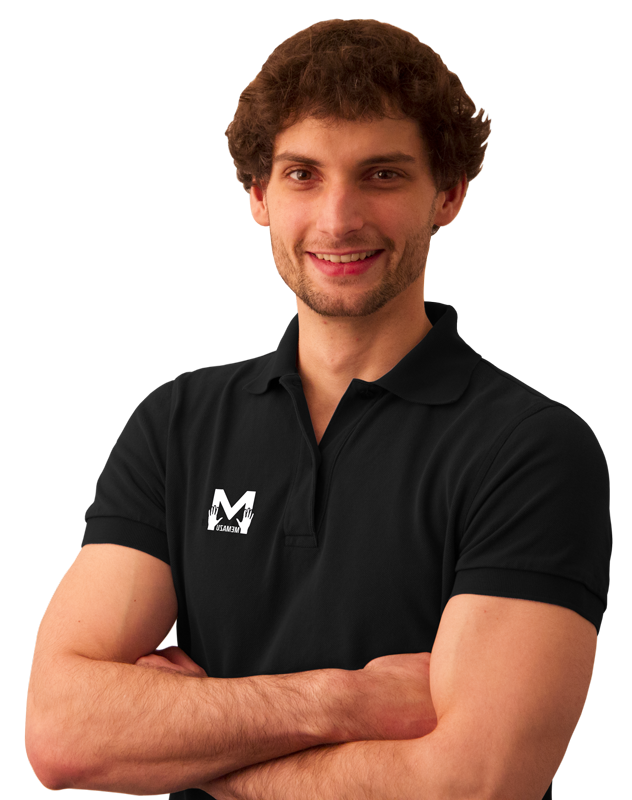
Leo Bornschlegel

Medical masseur

As a medical masseur, I have been successfully combating the often complex complaints of my patients and clients for almost 20 years. Beginnend mit meiner Tätigkeit in Kliniken und Rehazentren hatte ich bereits früh die Möglichkeit, fundierte Kenntnisse in den Bereichen der therapeutischen Massage, wie auch den medizinischen Heilanwendungen zu sammeln.

Nach einer neuen Herausforderung suchend, ergab sich für mich im späteren Verlauf meiner beruflichen Karriere die Gelegenheit, in Spas und Wellnessoasen renommierter 5-Sternehotels zu arbeiten. Hier eröffneten sich mir neue Möglichkeiten und ich erkannte schnell, welch wohltuenden Mehrwert eine tiefenentspannende und zugleich medizinische Massage meinen Patienten bietet.

Noch lange nicht am Ziel meiner interessanten Tätigkeit angekommen, möchte ich nun mein Wissen an Sie weitergeben und habe mich entschlossen, eine eigene Massagepraxis in Zürich zu eröffnen. Ich zeige Ihnen Wege und Möglichkeiten in einer ansprechenden Atmosphäre auf, wie Ihre Beschwerden effizient geheilt werden können und dass Medizin und Wohlbefinden oftmals nahe beieinanderliegen.

Qualitätssicherung durch:

Referenzen:

Firmen

Spitäler, Reha & Praxen

Hotellerie & Wellness